Teach the boundary, not just the skill
Every student learns where iridology stops and veterinary medicine begins. A practitioner who overstates what the iris can tell them is worse than no practitioner at all.
The School
The school exists to pass on a method that took a lifetime to build. Carefully, and to people who intend to use it properly.
The founder
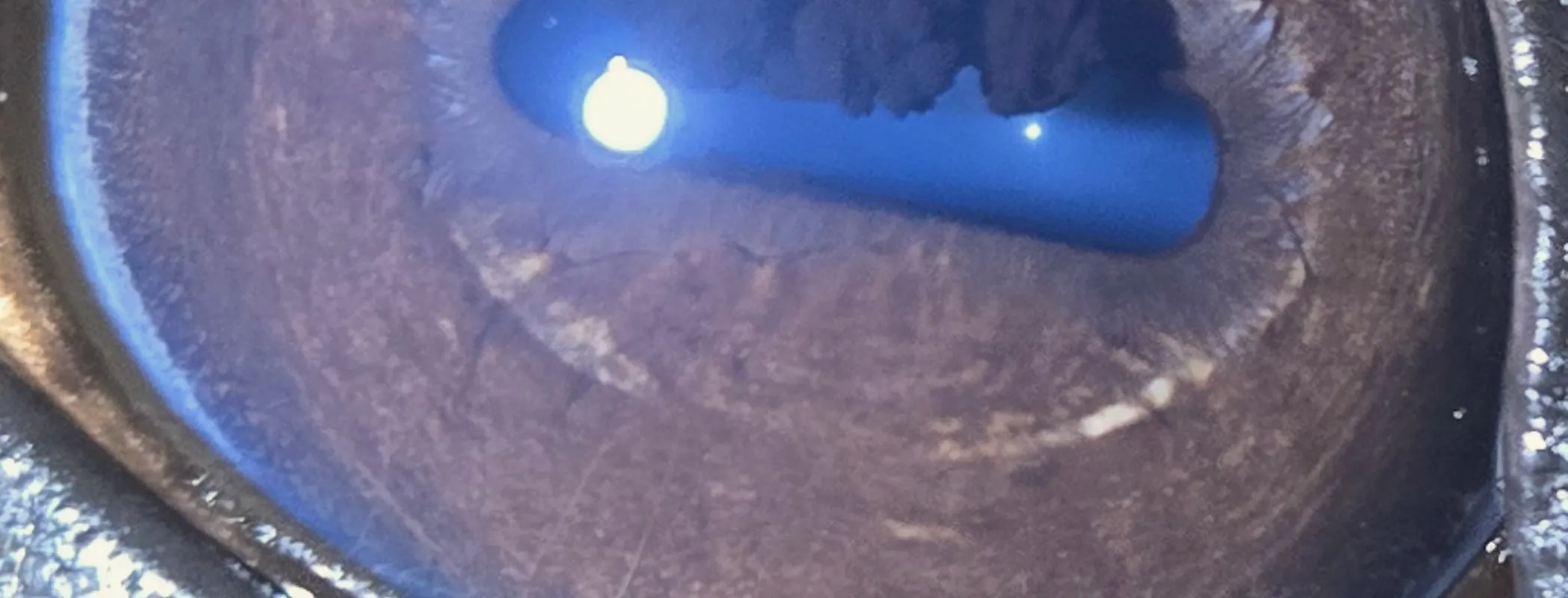
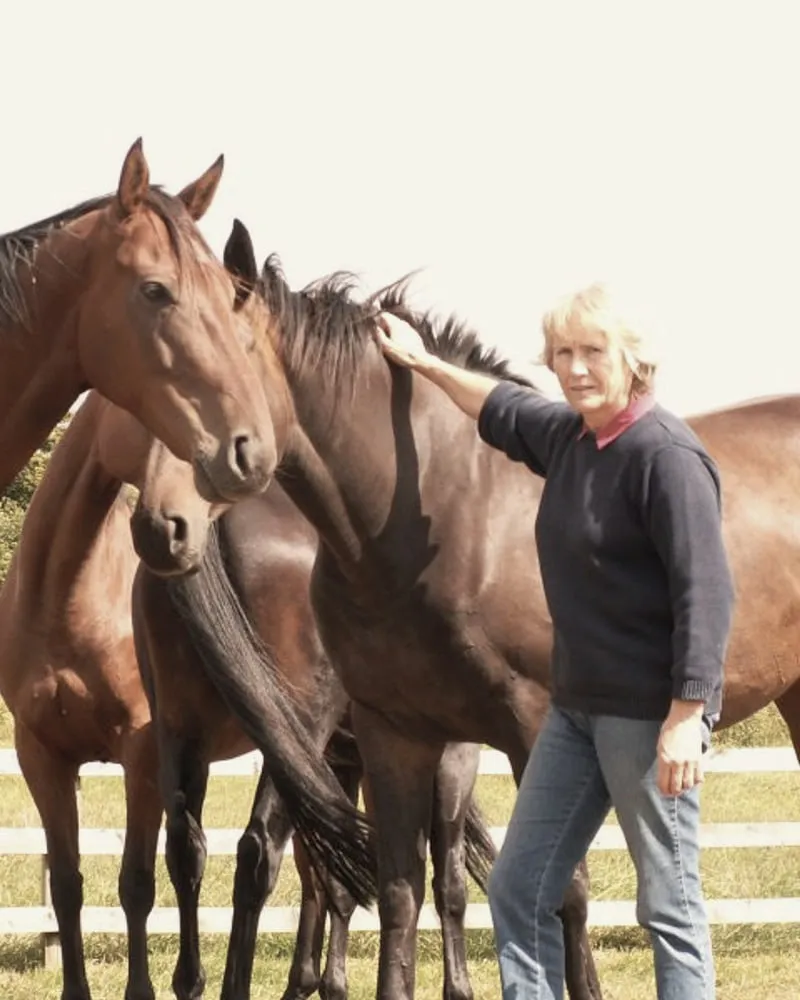
Ellen came to horses first and iridology second. She had already trained in human iridology and in medical herbalism when she began to wonder whether the same principles held in the equine eye.
Establishing that they did was not a matter of theory. She photographed and recorded irises, then attended post-mortem after post-mortem, checking the markings she had noted against what the veterinary surgeon actually found in the animal.
Where the eye had been right, she recorded why. Where it had been wrong, she recorded that too. Over years, that accumulated into a map specific to horses, not a human chart with the labels changed.
It is also why the course pairs iridology with herbalism throughout. Ellen never regarded finding a weakness as the end of the job.
Your instructor
Certified Equine Iridologist & Principal Instructor · Derbyshire, UK
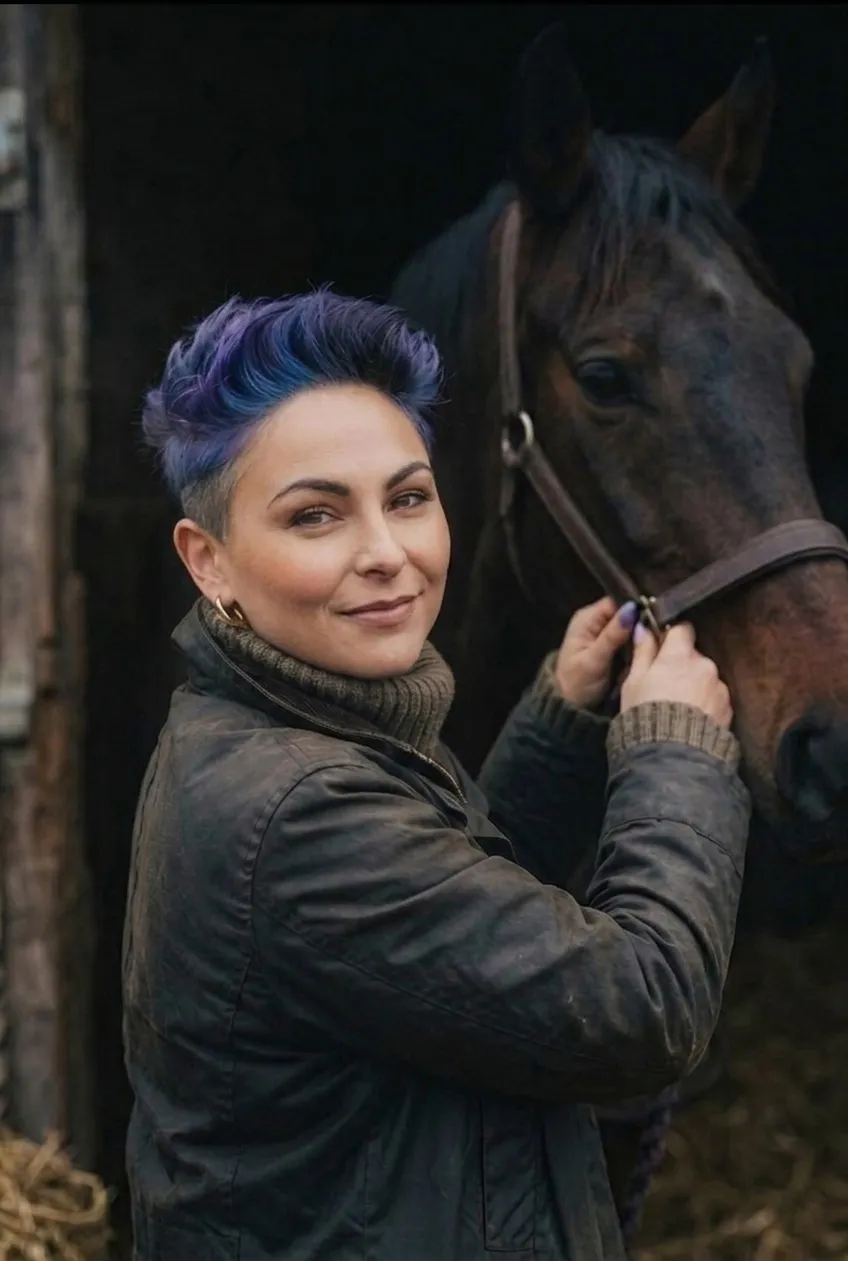
Michaela qualified under Ellen and now runs the school. Every student is taught by her personally. The papers are marked by her, the case studies are assessed by her, and it is her phone number at the bottom of this page.
She also writes the £70 reports herself. There is no team, which is deliberate: it means the person teaching the method is the person still using it on real horses every week.
She works from Derbyshire, and every student deals with her directly rather than with a support desk.
How we teach
Every student learns where iridology stops and veterinary medicine begins. A practitioner who overstates what the iris can tell them is worse than no practitioner at all.
Anyone can notice that a marking looks unusual. The method is about assessing severity, position and significance, and being honest when the image will not support a conclusion.
A report that only describes the eye has failed. The output is always a plan the owner can start on this week.
From the register
Graduates working commercially across three continents, in their own words.
Her methods for linking the iris to systemic health and herbal support have completely elevated my practice. It gave me the whole picture of the horse’s health.
Equine iridology is so beneficial for your horse’s health. A world of knowledge uncovering so much insight.
I’m an internationally certified equine iridologist. It’s been one of the most important and beneficial additions to my practice, and the knowledge of herbal remedies is incredible.
Two ways in
The diploma if you want the skill for life. A single report if you just want to know what is going on with your horse.
£1,500 for the diploma, or five monthly payments of £300. £70 for a single report.
Not sure which? and she'll talk it through with you.